When Frasers Group disclosed a near 6% stake in Puma this week — making Mike Ashley's company the second-largest shareholder in the German sportswear brand — it barely registered as a surprise. This is, after all, a company that has turned opportunistic deal-making into an art form.
But what makes Frasers genuinely fascinating isn't any single acquisition. It's the sheer scale and diversity of a retail empire that now spans everything from bargain trainers (Sports Direct) to bespoke tailoring (Gieves & Hawkes), from high-street gaming (GAME) to Miami luxury fashion (The Webster).
The question is: how do you actually manage all of that?
The Portfolio Problem
Frasers Group operates over 1,500 locations across more than 20 retail brands with roughly 30,000 employees. The portfolio includes:
- Sports Direct — the mass-market sports goods giant that generates the bulk of profits
- Flannels — a premium luxury fashion chain
- House of Fraser / Frasers — department stores repositioned as elevated retail destinations
- GAME, Evans Cycles, Jack Wills, USC — specialist high-street brands
- The Webster — ultra-luxury multi-brand boutiques
- Everlast Gyms — a fitness chain
On top of that, Frasers holds meaningful minority stakes in Currys (11%), ASOS (12.6%), Mulberry (37%), AO World (22.2%), Boohoo (5%+), and now Puma (~6%).
Each of these brands serves a completely different customer. A Sports Direct shopper and a Flannels shopper may as well be on different planets. Yet strategic decisions about store layouts, staffing, product placement, and marketing need to be made for all of them — ideally using data rather than intuition.
The Multi-Brand Concept Store Challenge
In September 2024, Frasers opened a new concept store in Sheffield that combined Sports Direct, USC, GAME, Evans Cycles, and Sofa.com under a single roof. It's essentially a modern department store — multiple brands, multiple customer segments, one physical space.
This model raises exactly the kind of questions that in-store analytics can answer:
- How do customers flow between brands? Does someone browsing trainers in Sports Direct naturally walk through to USC, or do they leave without discovering it?
- Which sections drive footfall vs. which drive conversion? GAME might attract teenagers who spend time but don't buy; Evans Cycles might convert at a high rate with lower traffic.
- Where are the bottlenecks? When multiple brands share a building, congestion at one entrance or section can suppress activity elsewhere.
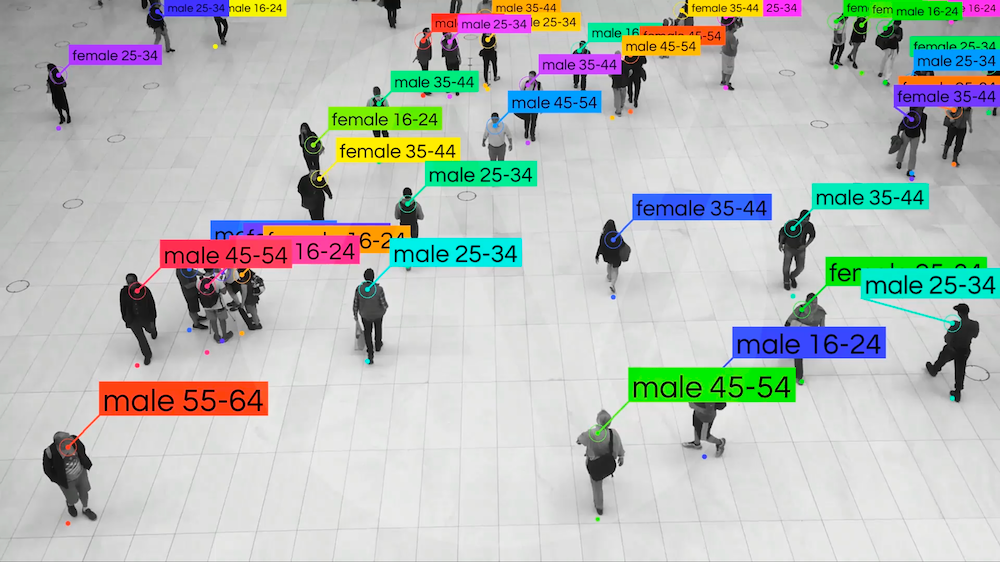
Without spatial analytics — heatmaps, pathway tracking, dwell time analysis — you're designing these multi-brand environments by guesswork.
Real Estate as Strategy
Frasers has also been aggressively buying shopping centres — including Braehead in Glasgow for £220 million in late 2025. Owning both the stores and the buildings they sit in gives Frasers landlord power: control over rents, tenant mix, and the ability to install their own brands in prime positions.
But it also multiplies the analytics use case. As a shopping centre owner, footfall data doesn't just optimise individual stores — it justifies rents, proves location value to third-party tenants, and informs decisions about which Frasers brands should occupy which positions.
Frasers Plus: Closing the Data Loop
The group's fintech play, Frasers Plus — a buy-now-pay-later and loyalty platform — generates transactional data across the portfolio. Customers who use Frasers Plus create a purchase history that spans Sports Direct, Flannels, Jack Wills, and beyond.
Now imagine pairing that transaction data with in-store behavioural data: where those Frasers Plus customers walked, how long they browsed, which displays they engaged with before purchasing. That's the closed loop between intent and action — and it's where the most valuable retail insights live.
The Puma Angle
The Puma stake fits a well-established pattern: Frasers takes minority positions in companies and uses them as leverage — to push for strategic changes, encourage them to stock Frasers products, or adopt Frasers services. They've done it with Debenhams, JD Sports, Mulberry, and ASOS.
But here's the data angle for supplier relationships: if Frasers could measure how specific brands — Puma, Nike, Adidas — perform in-store (footfall driven, conversion rates, dwell time near brand displays), they'd have empirical leverage in supplier negotiations. Not just "we sell X units of your product," but "your brand drives Y minutes of engagement and Z% conversion when positioned in this zone."
The Opportunity
Frasers Group is arguably the most complex multi-brand retail operation in the UK. They've built the portfolio. They've bought the buildings. They've launched the loyalty platform. The missing piece is the spatial intelligence layer — understanding what actually happens inside each of those 1,500+ stores, across every format, every brand, every customer segment.
The retailers who figure that out first won't just optimise stores. They'll optimise entire portfolios.
In fact, one Frasers brand has already started. See how Flannels lifted conversion by 0.75% and staff productivity by 34% across 50+ stores using Aura Vision's in-store analytics — proof that the data-driven approach works, even within this portfolio.